Just How Big Will VoIP Market Grow? (Part 2)
As the Point Topic report states very briefly towards the end of its document:
“If you work hard and manage to marry your internet telephony service with a major mobile device manufacturer and solve any number of technical and regulatory issues, the market could really explode.”
Just How Big Will VoIP Market Grow? (Part 1)
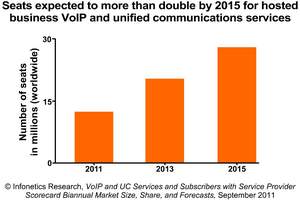
One set of recent data on the size of the global VoIP market comes from research firm International Data Corporation, which released a detailed breakdown of the market’s 2011 successes. This report states that the market racked up about $3.5 billion last year, when all was said and done.
$3.5 billion is a far, far cry from the $40 billion Point Topic projects for 2015, which begs the question… will the VoIP market really grow in size by over 10x last year’s volume over the course of the next 3-4 years? Is such growth even possible, or is Point Topic simply pulling grandiose numbers out of thin air?
Why is Skype Launching Free Wi-Fi in Britain?
Talk about giving up more privacy! It remains to be seen whether it will meet wide adoption among business community and whether this kind of targeted marketing will not turn many end users away from service.
VoIP over Cable or DSL?

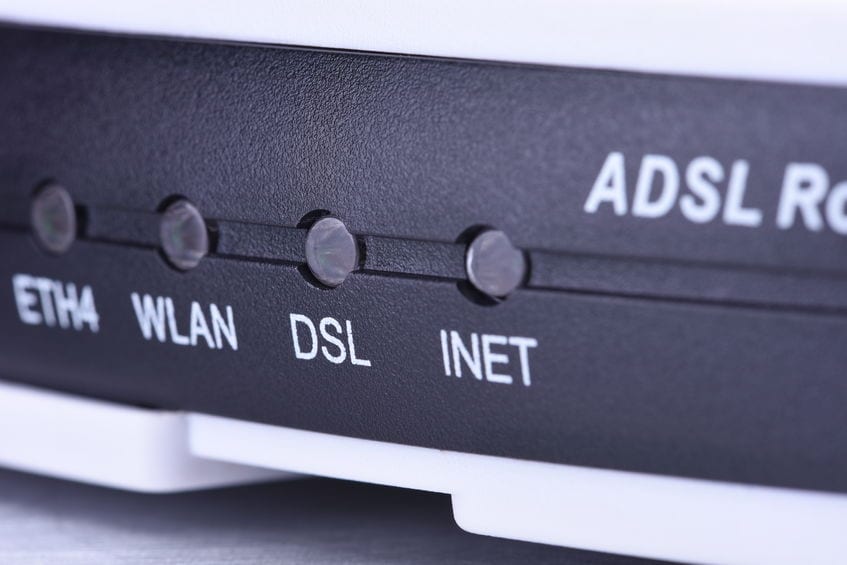
Using DSL or cable to carry VoIP traffic without bandwidth guarantees is a gamble. While Internet access over Cable and DSL are far from the best connectivity options for most companies they have their niche market. Most very small businesses and home office users that either manage bandwidth well or have very low bandwidth requirements can use these Internet access services and save on expensive fiber-optic connections. The other option is to use separate dedicated cable and/or ADSL connections for VoIP and data traffic. In most cases the savings and price-performance of two connections would not add up to the cost of a single dedicated T-1 circuit,. not to mention Fiber link.
Is There Value in SMS Text Messaging From a Desk Phone?
There is one area of popular communication desktop telephony devices have not adopted whose future is uncertain, and that’s the potential for SMS text messaging on a desktop phone. Is this something we’re going to see or use in the future? Here’s an even better question- is this something we would even want to see … Read more
Will Telephony Regulators Lose Their Teeth With VoIP Adoption?
The likely passage of SB 1161 needs to be taken pretty seriously. It won’t really change the way smaller, independent telephony companies and VoIP providers operate, but it will give the big telecom oligarchs, like AT&T, free rein to cut or degrade service and to continue to charge their inflated prices. Furthermore, passage of SB 1161 may have pretty profound implications on not only home phones, but also on cell phones, as mobile devices are likely to jump on the VoIP train sooner rather than later. If VoIP is totally deregulated than that means the future of mobile telephony technology is going to be deregulated. And that’s kind of scary considering the way modern regulated telephony mobile providers already abuse their customers.
PBX Phones Review: Altigen iFusion AP 300 Handset

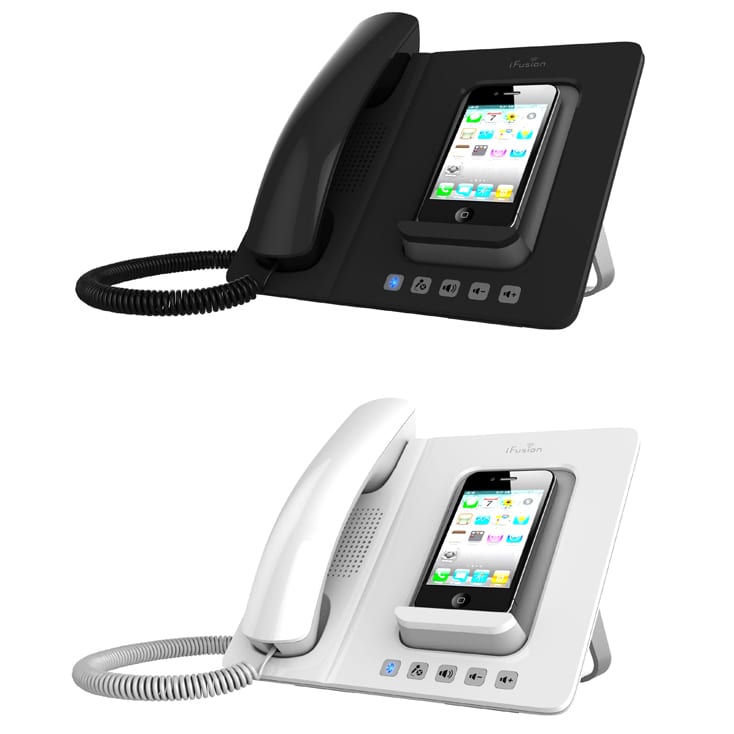
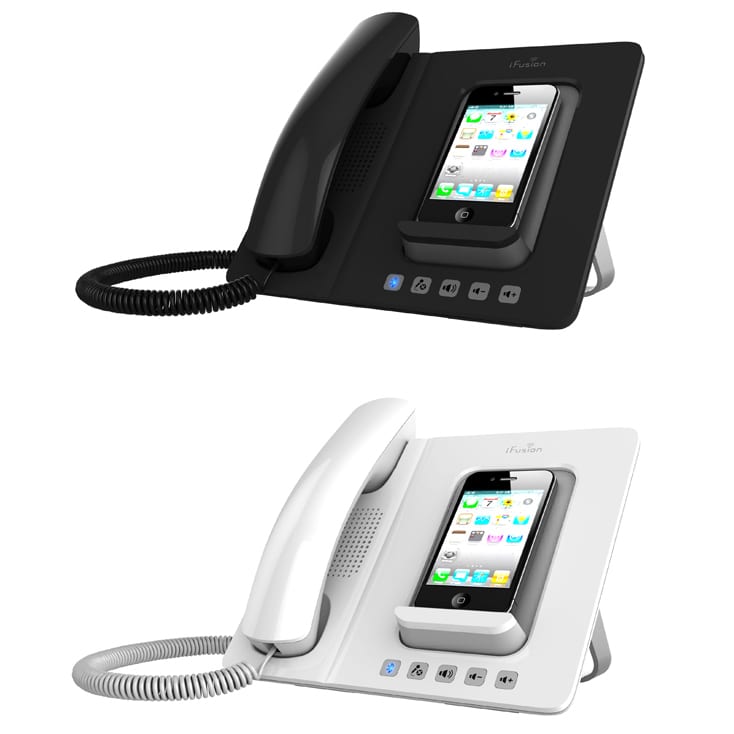
Overall, I think Altigen had a great idea: take a mobile device and turn it into a stationary handset by adding Bluetooth speakerphone hardware to it. Unfortunately the issue is a bit more complicated than that. iPhone is designed around being a mobile device. Surely you can use it as a TV remote or Gaming console, surveillance system or a million other things that ultra-portable computer allows you to do. But in the end it will not do them as well as the device that is purposed for that single task. There is always going to be a one extra step to perform any single function on a multifunctional device and that is selecting which function you are going to use. Can it be used? Yeah, it can, if you are willing to live with the limitations. But why not get a SIP handset that will work with your SIP-based hosted PBX.
CTB2J3SJ387D
Are VoIP and Video Chat Really the Future of Mobile Communications?
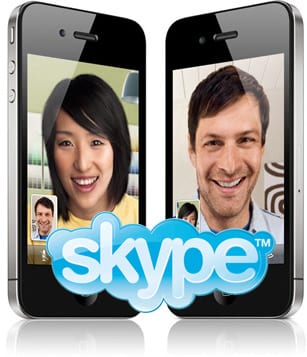
A recent editorial by Joel Evans over at zdnet argues that two forces are going to drive the future of mobile communication- VoIP and Video Chat. He bases this argument on a pair of experiences he recently had using Skype’s premium outbound calling functionality as well as the VoIP service’s video chat abilities, both of which he used on his mobile device, an iPhone connected to AT&T’s 3G network. He argued that the quality of the VoIP and video chatting services were at least as good, and often superior in clarity and reliability, than normal calls he made using AT&T’s traditional telephony network.
Should The USF Cover Broadband?
Some people, mostly telecom industry professionals, like to argue about how the USF is funded. There are certainly a few glaring chinks in that armor, but these day’s we’re noticing a much bigger tussle over defining the boundaries of the USF. These days, the debate rages fiercer over what technologies, precisely, we need to spread equitably around the country.
Useful Tips on IP PBX Security
Along with the benefits, VoIP technology brings many more security threats than traditional circuit switched telephony. IP PBX systems could be exploited from thousands of miles away without perpetrator actually physically tapping into your circuits. Because of that, many IP PBX systems offer a broad range of complex configurable PBX security features. PBX system security can be customized to suit the individual needs of a business. For this reason, the security should be designed and integrated with the specific telephony services you need to keep your business secure and productive.