A “Realistic” Picture of IP Telephony’s Cost Savings (Pt 2)
Think about it this way- unless your department is already grossly over budget, or unless your department has been explicitly instructed to cut costs, saving money isn’t that big of a deal in-and-of itself. In the absence of immediate budgetary pressure decision makers aren’t looking to spend less.
A “Realistic” Picture of IP Telephony’s Cost Savings (Pt 1)
Price is a huge factor when it comes to deciding between sticking with traditional telephony services and making the jump to IP telephony. It’s one of the biggest selling points IP telephony providers use to push their technology, and it’s one of the clearest, firmest, more directly measureable ways decision-makers at an organization can see the benefit of switching over to IP. After all, while organizational flexibility and scalability are great benefits they can seem a little abstract, factors whose potential may be difficult to envision when a business is currently locked into a relatively fixed traditional telephony technology set-up.
Is non-Interconnected VoIP a de-facto “Communications Technology”?
Non-interconnected VoIP effectively received its communications classification with the 21st Century Communications and Vide Accessibility Act of 2010 (CVAA), which had a lot to say about what it called “non-interconnected VoIP service.” This is a broad-ranging classification that applies to pretty much any technology which involves “real-time voice communication” via IP (that hasn’t already been identified as an interconnected VoIP service). The FCC’s rulings within this act seem fairly limited as they pretty much only define strictures for service registration with and contribution to the TRS, but the simple fact this act labels non-interconnected VoIP as a “communications service.”
Is Emergency Calling VoIP and Hosted PBX’s Achilles’ Heel?
Location-related problems with remotely hosted communications technologies can be mitigated on mobile devices as these devices often have location services automatically enabled and as such as relatively easy to track. But emergency calls made from hosted PBX and/or VoIP fixed phones don’t tend to have location services enabled in their architecture. There is no easy way to trace a call made using a soft phone over cellular network, for example.
Is Regulatory Creep Inevitable for VoIP?
It’s clear that some level of regulation is necessary for the VoIP industry to ensure a certain standard for service quality. But excess regulation may lead to an unfortunate circumstance where the technology isn’t allowed to advance in any noticeable way and where the existing telecom giants retain all their incumbent power.
Can Hosted PBX Improve Employee Retention?
The study in question was conducted by Robert Half International and it shed light on what really matters most to employees when it comes to job satisfaction and whether or not they had plans to seek alternative employment.
Hosted PBX and Business Continuity in Times of Crisis
With a hosted PBX solution the phones you have in your office ring when your clients give you a call because your hosted PBX provider routes all incoming communications to them. But your provider could just as easily route all incoming calls to another phone bank, to someone’s home line, or even to a cell phone. Which means even if your office is totally decimated, even if your telephone hardware gets smashed and flooded to pieces, when you sign up with a hosted PBX solution your employees can run business as usual the next day if you simply have your provider route all incoming calls to workable phones your employees have access to.
PBX Market Bump as Q2 Results Roll In
In Q2 2012 global PBX sales dropped 2.6% from Q1 sales and rung up about 1.4% lower than they were at the same time last year. These aren’t monumental sales drops, but they are drops all the same and need to be taken seriously.
Does FCC Ruling on Verizon Mean Free Tethering for All?
Government is seldom credited for doing something right. I believe, that we are seeing a scenario in which regulation will actually work well protecting mobile consumers. Attaching consumer protection rules to sale of a highly demanded spectrum was a good and wise thing to do. Another example was a policy in 2009 forced AT&T to stop block any third-party VoIP application that allowed free or low-cost phone calls which circumvent that carrier’s network connection. And that’s very, very good news for the future of consumer VoIP.
Will the Switch to IPv6 Create VoIP and PBX Problems?
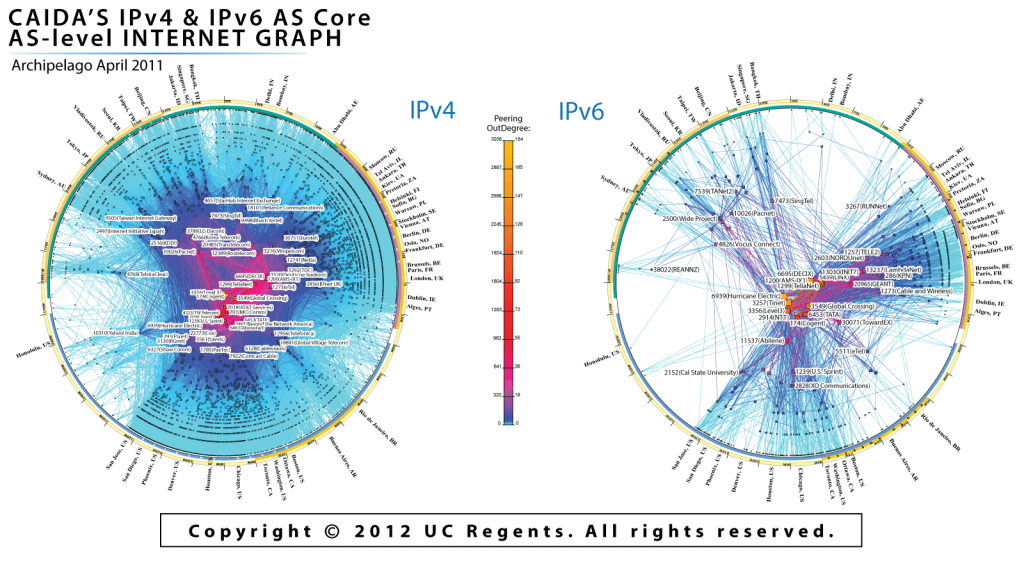
Right now the Internet is going through a massive transition, an overhaul of the addresses that will impact every network device connected to it.
What is this overhaul?
How will it change the Internet?
And how will it impact business VoIP telephony?